11 May
12 May
13 May
14 May
15 May
16 May
17 May
18 May
19 May
20 May
21 May
22 May
23 May
Revealing more family strategies at work, and the heavy price the young pay in hostile takeovers. Part 6 of 12.
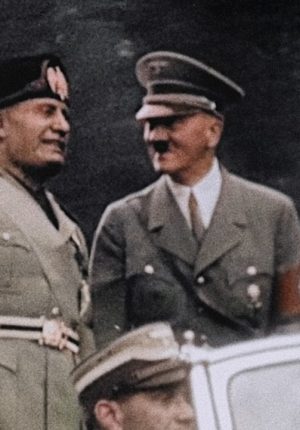
This film explores the mechanisms of Fascist power, the cult of violence and state political repression, as they lead Italy towards disaster. Part 1 of 2.
This film explores the mechanisms of Fascist power, the cult of violence and state political repression, as they lead Italy towards disaster. Part 2 of 2.
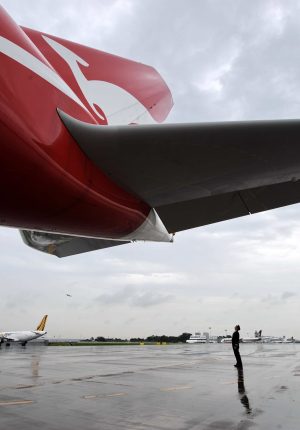
Just four minutes after take-off from Singapore Changi Airport, on 4 November 2010, Qantas Flight 32 suffered an uncontained failure in one of its engines. The failure was the first of its kind for the Airbus A380, the world’s first double-deck jet airliner. Shrapnel from the engine damaged the fuel system and led to a series of failures, severely compromising the aircraft. The crew spent almost two tense hours in the air before navigating a successful emergency landing, saving everyone onboard. In this episode, Captain Richard de Crespigny shares his account of heroically handling what could have been certain disaster. Part 9 of 10. Ⓢ
British Airways Flight 38 was on final approach into London Heathrow Airport when it crashed just short of the runway on 17 January 2008. What had been an uneventful passenger flight from Beijing, China, soon became almost fatal just moments before landing when a lack of power to both engines caused the Boeing 777 to crash. The quick thinking by the crew led by Captain Peter Burkill saved all 152 people on board. This episode includes one survivor’s account of the terrifying touchdown. Part 10 of 10. Ⓢ
In May 1940 Churchill became Prime Minister and Germany launched its offensive. By June 4th British troops had been evacuated from Dunkirk, on the 18th Churchill delivered the 'Finest Hour' speech, by mid-July the Battle of Britain had begun. Part 1 of 6.
On June 6th 1944, the largest amphibious invasion in military history commenced targeting the coast of Normandy in France. The 100 days that follow would see the end of Nazi dominance in Western Europe. Part 2 of 6.
In July 1956 Gamal Abdel Nasser, president of Egypt, nationalised the Suez Canal. Israel, Great Britain and France responded. It was one of the great follies of modern history from which the British and French were obliged to timidly withdraw. Part 3 of 6.
There is a special 100 Day span in modern history, a span that starts and ends with tragedy. The year is 1968. On March 3rd Martin Luther King, Jr was assassinated. Weeks later, within the same 100 day period, Robert Kennedy is assassinated. Part 4 of 6.
November 9th 1989 the most solid symbol of the Cold War, The Berlin Wall which had divided the city for almost thirty years, was knocked down. The Soviet Union begins to come apart. The 100 Days that surrounded this symbolic event changed our world. Part 5 of 6.
January 17th 1991 - the UN passed Resolution 678, giving Iraq an ultimatum to leave Kuwait following their invasion. Desert Storm - a war costing 61 billion USD would be over in a matter of weeks, but the consequences are still felt today. Part 6 of 6.
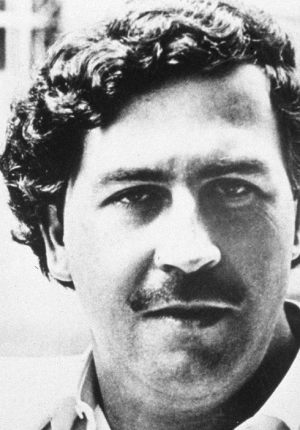
The true story of the mission to assassinate the world’s most dangerous man. In 1989, Scottish mercenary and ex-SAS operative, Peter McAleese, was hired by a Colombian drug cartel to lead a small team of ex-special forces commandos on a mission to assassinate the world’s biggest drug baron, Pablo Escobar. With access to never-before-seen footage of the mission and interviews with McAleese and other key players in the story, Killing Escobar reveals how McAleese’s violent upbringing in Glasgow, his training in the SAS and experience as a mercenary in Africa led him into the jungles of Colombia to kill Escobar, and how this mission would reshape his life forever.