1 Apr
2 Apr
3 Apr
4 Apr
5 Apr
6 Apr
7 Apr
8 Apr
9 Apr
10 Apr
11 Apr
12 Apr
13 Apr
Shopping with TJC
One of the most significant and jaw-dropping ancient discoveries ever made is happening now. In the far North of Scotland, at the heart of one of the most important sacred sites of the ancient world, archaeologists are unearthing an amazing 5,000 year-old religious temple complex, the first painted wall art ever seen from the Stone Age in Europe and the precious objects that the builders left. This documentary asks: who built these great monuments? How were they used? And what did these people believe?
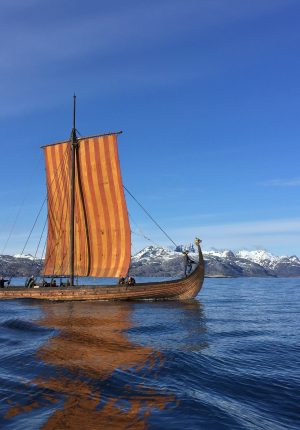
When King Edward the Confessor dies without an heir, it triggers a bitter race to succeed him as King of England. Earl Harold is on the spot and takes the crown, but in Normandy, Duke William believes the throne has been promised to him and decides to invade. Meanwhile, in Norway the Viking king Harald Hardrada also fancies himself as King of England, and he too puts together an invasion force. Very soon, England will be under attack. Part 1 of 3.
King Harold of England has to take on two invasion forces. First, his brother Tostig attacks the south coast. He is repelled, but there is more to come. Later in the year, a vast Viking invasion force led by King Harald Hardrada of Norway lands in the north of England. Harold rushes to Stamford Bridge to fight for his kingdom and for his life. Meanwhile, Duke William of Normandy is ready to invade, but storms keep his invasion fleet trapped in port. Part 2 of 3.
When the winds finally change, Duke William leads his vast invasion fleet across the Channel after months of being trapped in a port in northern France. But King Harold is 300 miles away in the north, having defeated the Vikings. He has to rush back south, gather a new army and head to Hastings to take on this new invasion. The two armies meet at battle in Sussex on 14 October 1066, and the outcome changes the shape of England and Europe forever. Part 3 of 3.
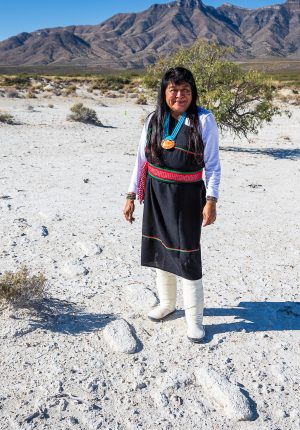
Thousands of prehistoric footprints in New Mexico’s White Sands National Park capture moments when Ice Age humans crossed paths with enormous ground sloths and mammoths. What can this new evidence reveal about the peopling of the Americas? Ⓢ
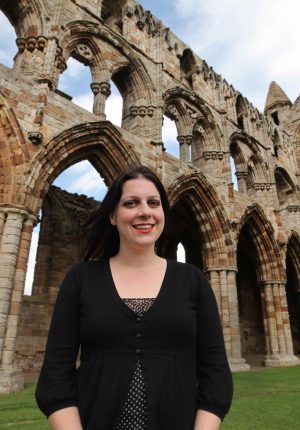
Dr Janina Ramirez explores how monasteries evolved from a cult of extreme isolation and self-deprivation into powerhouses of Anglo-Saxon art, industry and learning. Janina begins her journey on the desolate rock of Skellig St Michael off the east coast of Ireland, home to the oldest surviving monastery in the British Isles. Monasteries such as Lindisfarne and Whitby became beacons of civilisation and literature in the barbaric Anglo-Saxon world, creating wondrous works of art that include the Lindisfarne Gospels and St Cuthbert's pectoral cross. A rival form of regimented, communal monasticism was imported into southern Britain from Rome, and Janina reveals the holy struggle that ensued between these two opposing monastic ideals. The victors would transform England's culture and landscape - until they too were destroyed by a new wave of barbarian invaders. Part 1 of 3. Ⓢ
The golden age of the British monastery was during the medieval period, when monks transformed British society and rose to a position of immense power. Fighting back after centuries of defeat and neglect, a wave of new monasteries spread across the nation, with over 500 British monastic houses established by the 14th century. Far from the inward-looking recluses of legend, monks were exceptionally creative, and became pioneers in the fields of medicine, science, scholarship, industry, farming, art and music. They didn't turn their back on the medieval world, but helped transform it. Yet as the monasteries mingled with the world outside their cloisters they began to take on its corruption. They had begun with a vow of poverty, but eventually came to own a third of the nation's land. This wealth, combined with the sins of individual monks, sealed their fate, and as the medieval period ended, the monks were on the brink of catastrophe and collapse. Part 2 of 3. Ⓢ
Dr Janina Ramirez discovers how the immensely rich and powerful monasteries that had dominated British society for a thousand years, were annihilated in less than five. In the 15th century, eight hundred monasteries in England owned one third of the nation's land. Many monks were living in palatial monasteries and were patrons of the finest art and architecture. Janina then traces the story of the dissolution of the monasteries under Henry VIII and Thomas Cromwell. Was the dissolution the violent action of a greedy and overbearing monarch, or the inevitable 'end of days' for a rotten and outmoded institution? Janina uncovers stories of shocking corruption alongside examples of extraordinary pious sacrifice. Although not a single monastery survived the systematic liquidation, Janina shows the lasting impact Britain's millennium of monasteries had on its society and culture. Part 3 of 3. Ⓢ