31 Mar
1 Apr
2 Apr
3 Apr
4 Apr
5 Apr
6 Apr
7 Apr
8 Apr
9 Apr
10 Apr
11 Apr
12 Apr
Maiya May goes to Cheyenne to visit a supercomputer. In Michigan, she observes the explosive end of a coal plant. Returning to Atlanta, Maiya and Dr Marshall Shepard discuss climate challenges and vulnerabilities in the U.S. Part 5 of 6.
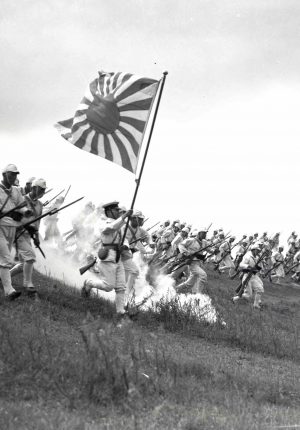
This episode begins with the Empire of Japan rising on the international Stage. In 1931, the political structures that allowed the military to operate outside of the control of civilian government result in the invasion of Manchuria. A new view of Japan's divine destiny under the Emperor emerges. Political ideology grows to support Japanese expansion. 1937 sees the full-scale invasion of China. The episode closes on the surprise attack of Pearl Harbor in December, 1941. Part 1 of 4. Ⓢ
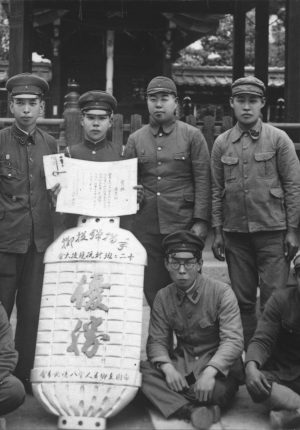
In a few weeks a vast empire has been created. This episode begins with Victory in Malaya and the fall of Singapore. Then the Philippines and Burma fall, and Thailand is bullied into an alliance. On the Home Front, people are rejoicing and presents are distributed to every household. But the successes create a logistical nightmare. The effect of the belligerent lack of cooperation between the Imperial Japanese Army and Imperial Navy is explored. Only six months after Pearl Harbor, the war begins to turn. Part 2 of 4. Ⓢ
This episode turns its attention to the experience in the occupied territories; the various puppet governments, resistance and attempts at guerrilla warfare. The treatment of POWs is examined. The political influence of the industrial and financial elite is ongoing. There is a growing awareness of the truth in the Japanese population - domestic propaganda begins to contradict lived experience. Japanese industry fails to keep pace with the demands of the military. Allied victories begin to draw in the net. Part 3 of 4. Ⓢ
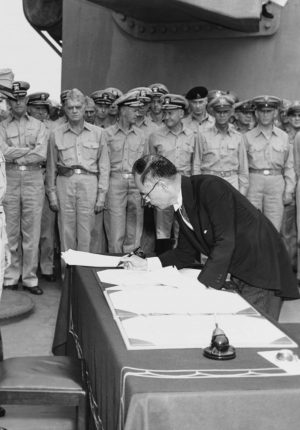
American bombing pounds the Japanese home islands. Slave labour and sex slavery are evident. In August 1945, atomic bombs fall on Hiroshima and Nagasaki. Calls for surrender are resisted and as agreed at Potsdam, the Red Army invades Manchuria. For the first time the Japanese hear the voice of their Emperor in a broadcast telling them to “bear the unbearable”. Finally, General MacArthur accepts Japan’s surrender on behalf of the Allied Powers. Japan begins the slow journey to miraculous recovery. Part 4 of 4. Ⓢ
Edward VIII is most famous for his abdication, less than a year after being crowned King, in 1936. But what happened afterwards is where the true scandal lies. This revealing documentary shows the extent of the Duke of Windsor’s treachery during WW2.
Winter 1944 to 1945. The Allies are unprepared for Hitler's counterattack in the Ardennes Forest of Belgium and Luxembourg. It is the biggest battle of the war on the Western Front, fought during the coldest winter in memory. By the time the Battle of the Bulge is over, Hitler's enormous gamble has ended in disaster and the Russians are approaching Berlin. Meanwhile, in the Santo Tomas Camp in the Philippines, thousands of internees await liberation. A series by Ken Burns. Part 11 of 14.
Winter to Spring 1945. On the island of Iwo Jima, the marines face 21,000 Japanese defenders who, without hope of reinforcement, have been ordered to kill as many Americans as possible before being killed themselves. Once the island is taken, Allied bombers set the cities of Japan ablaze, killing thousands and leaving millions homeless. In Europe, Americans are crossing the Rhine and driving into Germany, while the Russians are within 50 miles of Berlin. A series by Ken Burns. Part 12 of 14.
Spring 1945. In the Pacific, Americans fight on the island of Okinawa while kamikaze pilots wreak havoc on the fleet offshore. In Europe, allied forces rapidly push across Germany from the east and west, and American and British troops discover the true horrors of the Nazis' industrialised barbarism at Buchenwald, Dachau, Mauthausen and other concentration camps. Finally, on 8 May, with their country in ruins and their Fuhrer dead, the Germans surrender. A series by Ken Burns. Part 13 of 14.
May to December 1945. In June, the battle on Okinawa ends yet Japan's rulers, despite the agony their people are enduring, resist unconditional surrender. On 6 August 1945, an American plane drops an atomic bomb on Hiroshima. Two days later, Russia declares war against Japan. A second atomic bomb is dropped on Nagasaki and, finally, Japan surrenders. In the following months, hundreds of thousands of American servicemen and women return home. A series by Ken Burns. Part 14 of 14.