10 Aug
11 Aug
12 Aug
13 Aug
14 Aug
15 Aug
16 Aug
17 Aug
18 Aug
19 Aug
20 Aug
21 Aug
22 Aug
Almost four decades after her father’s death, Lady Irene Hatter embarks on a journey to find out the truth behind her father's bravery, which helped save the lives of hundreds of Jews during the Second World War.
In the darkest hours of WW2, thousands of young men from Burma volunteered to fight for the Allies. A handful of these men are still alive but have been long forgotten by Britain.
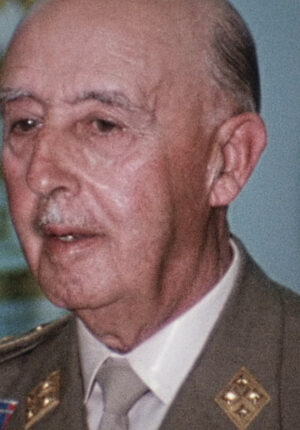
Franco experienced a remarkable rise through the ranks of the Spanish army until the Republican regime, in 1931, brought his career to a halt. The Civil War became his opportunity to seize absolute power in Spain. Part 1 of 2.
Having come to power through a coup, General Franco manoeuvred from 1939 until his death in 1975 to remain in control. While his former allies Hitler and Mussolini disappeared with the end of WW II, his political longevity remains surprising. Part 2 of 2.
An American working with British secret agents parachutes into France just after D-Day to organise the French Resistance into a cohesive army. The mission was to stop Germany's most feared troops from reaching Normandy in the days after the D-Day landings of June 6, 1944. Narrated by Kevin Bacon.
At the end of a bloody civil war, Francisco Franco seized power and ruled Spain with an iron hand for nearly four decades. Under his leadership the conservative, monarchist armed forces staged a coup against Spain’s democratically elected republican government. The insurrection was supported by Italy and Germany. Three years of bitter fighting followed and, by April 1939, Spain had become a different country. The hostilities and political purges cost half a million lives. Part 1 of 4.
The Franco myth stands for a cruel regime; for the darkest chapter in Spanish history. Franco gave himself the title of Caudillo de España - Supreme Leader of Spain. He created his own rituals of power: the war hero, the family man and the mass murderer. Franco was a man of many faces. Franco and his family formally moved into the El Pardo Palace, the former summer residence of the king. Was that still the behaviour of a head of state? Or was it already megalomania? Part 2 of 4.
At the end of the Second World War the cards in global politics were reshuffled. The Allies now made a clear distinction between the friends and foes of democracy. The situation became critical for Franco. His reign of terror caused widespread suffering in Spain, and many people sought to topple him. This episode shows how he managed to prevail within the new global power structure. Part 3 of 4.
In the mid-1950s Franco’s foreign policy successes opened up new perspectives for Spain. After years of stagnation the country was now moving forward - thus, Franco’s rule was legitimised. Resistance fell silent, with the dictator sitting firmly in the saddle. But along with new friends, new influences also entered the country. Spain changed, confronting the regime with new challenges. How much longer could Franco cling to power? Could Prince Juan Carlos give the dictatorship a future? Part 4 of 4.