4 Jul
5 Jul
6 Jul
7 Jul
8 Jul
9 Jul
10 Jul
11 Jul
12 Jul
13 Jul
14 Jul
15 Jul
16 Jul
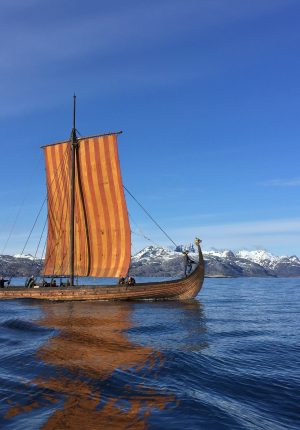
When King Edward the Confessor dies without an heir, it triggers a bitter race to succeed him as King of England. Earl Harold is on the spot and takes the crown, but in Normandy, Duke William believes the throne has been promised to him and decides to invade. Meanwhile, in Norway the Viking king Harald Hardrada also fancies himself as King of England, and he too puts together an invasion force. Very soon, England will be under attack. Part 1 of 3.
King Harold of England has to take on two invasion forces. First, his brother Tostig attacks the south coast. He is repelled, but there is more to come. Later in the year, a vast Viking invasion force led by King Harald Hardrada of Norway lands in the north of England. Harold rushes to Stamford Bridge to fight for his kingdom and for his life. Meanwhile, Duke William of Normandy is ready to invade, but storms keep his invasion fleet trapped in port. Part 2 of 3.
When the winds finally change, Duke William leads his vast invasion fleet across the Channel after months of being trapped in a port in northern France. But King Harold is 300 miles away in the north, having defeated the Vikings. He has to rush back south, gather a new army and head to Hastings to take on this new invasion. The two armies meet at battle in Sussex on 14 October 1066, and the outcome changes the shape of England and Europe forever. Part 3 of 3.
This documentary explores the unexpected murder of a Jewish teenager, which became an international scandal. A story of violence, secret police units, cover-ups, and expediency. It casts a light on Britain's legacy in the Middle East.
December 1941 to March 1942. The Japanese attack on Pearl Harbor in December 1941 thrusts the United States into the global cataclysm that will eventually touch every family on every street in every town in America. Within a few months, millions of young men have entered the armed forces and are beginning to train for war. A series by Ken Burns. Part 1 of 14.
March 1942 to December 1942. With U-boats menacing the East Coast, and little good news from overseas, many worry that the United States is utterly unprepared to fight in a 'total war'. But after six months of gruelling combat on Guadalcanal, the Americans finally stop Japan's expansion in the Pacific. A series by Ken Burns. Part 2 of 14.
January 1943 to June 1943. American troops land in North Africa and test themselves for the first time against the German and Italian armies, learning to set aside the notion that killing is a sin, and adopting the outlook that 'killing is a craft'. Back home, cities become booming 'war towns' overnight as nearly all manufacturing is converted to the war effort, and thousands of women become industrial workers. A series by Ken Burns. Part 3 of 14.
July 1943 to December 1943. On daylight bombing missions, American airmen gamble with their lives against overwhelming odds to bring the war to the heart of Hitler's vast empire. Allied forces invade Sicily and then Italy but, as they grind their way towards Rome, the weather turns bad and the terrain grows more and more forbidding. Twisting mountain roads and blown bridges have to be negotiated while under constant German fire. A series by Ken Burns. Part 4 of 14.
November 1943 to February 1944. In November, the US marines take the tiny Pacific atoll of Tarawa, but at a terrible cost. Back home, Japanese-Americans are permitted to form a special segregated infantry unit and begin to train for combat. As the war economy booms, ugly racial violence erupts in cities across the country. Overseas, in the mountains south of Rome, the allies try to fight their way around the edges of Monte Cassino, but are stopped cold. A series by Ken Burns. Part 5 of 14.
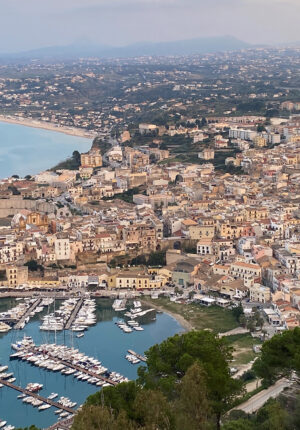
Crossroads explores Sicily’s ancient past when it was the breadbasket of the ancient and then medieval world and as such, occupied by Greeks, Romans, Carthaginians, Arabs and Normans. Part 1 of 2.
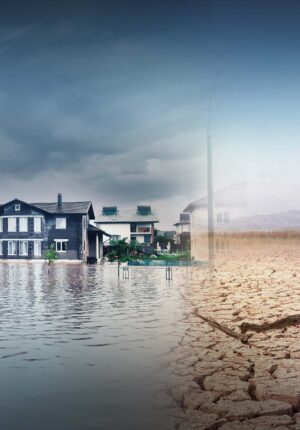
Maiya May learns about the severe impacts of droughts and floods on agriculture and the alarming depletion of groundwater reserves. Despite these challenges, Maiya finds hope in innovative agricultural practices. Part 4 of 6.