23 Nov
24 Nov
25 Nov
26 Nov
27 Nov
28 Nov
29 Nov
30 Nov
1 Dec
2 Dec
3 Dec
4 Dec
5 Dec
Shopping with TJC
Exploring the river environment, where the enormous Nile crocodiles and hippopotamus are found. Part 12 of 12.
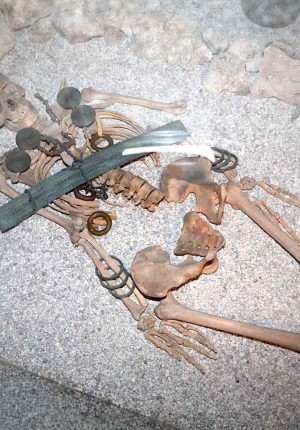
Inside a 2,400-year-old tomb the remains of a woman and two men have been recovered. She was an aristocrat; they were giants of men. A shaman and her entourage? Relatives or sacrifices? An interdisciplinary team of scientists is working to unlock the secret of this ancient ménage à trois; it may be the first real evidence of mystical rites from the dawn of the Celts.
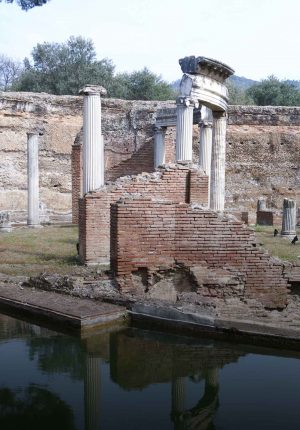
Deep beneath the streets of Rome is an amazing underground world: a labyrinth of tunnels and vaults more than 360 miles long.This vast subterranean cemetery was created by ancient Romans nearly 2,000 years ago. Just a few years ago, a previously undiscovered catacomb containing thousands of human skeletons was unearthed, all featuring a burial ritual never seen before in Rome. Now a team of specialists is on a mission to unlock the skeletons’ secrets, using DNA mapping and cutting-edge archaeology to solve the mystery of who these men and women were and how they died. Evidence points to waves of mass death occurring from the late 1st century AD to early 3rd century AD. The bones reveal no sign of physical trauma, so what killed them? An expert in reconstructing ancient DNA joins the team and suspects it may have been the Antonine Plague – an epidemic which devastated the Roman Empire.
New archeological discoveries, combined with the very latest scientific techniques, are offering incredible insights into who the Neanderthals were and how they lived, revealing that they were much closer to us than we ever imagined.
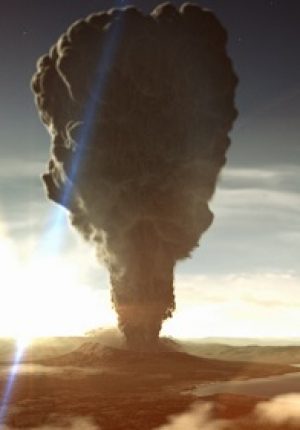
It was a major catastrophe in human history — the day in 79AD when the Roman seaport of Pompeii was buried under the ashes of Vesuvius and countless people were killed. Pompeii was preserved perfectly, a snapshot of Roman antiquity. The city has become a symbol of this entire epoch. And nearly 2,000 years after the eruption, the myth of Pompeii has lost none of its fascination. But its history does not end with its terrible downfall. This documentary tells for the first time what happened after the devastating volcanic eruption: how this natural disaster was dealt with, how the Roman emperor Titus intervened, and how the region's economic revival began.
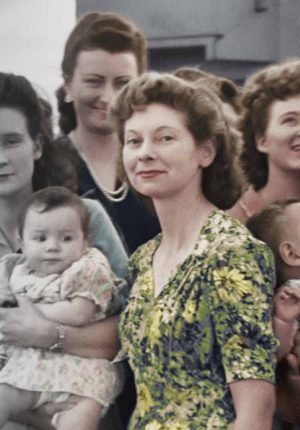
Marriage and family are the foundation on which to build a prospering federated nation. This episode charts the changing dynamics from the turn of the 21st century, when white men’s and women’s traditional roles are set in stone, to the gradual shift to include interracial marriage, single parents, step-children and working wives in the 1960s. Through the changing decades the concept of family radically transforms with WW2, more inclusive divorce laws for women and birth control shifting the power balance, giving women more freedom and power. But Indigenous families across the country are torn apart through the Stolen Generations where children are forcibly taken to orphanages or fostered out to white families with the intention of assimilating them into society. Part 1 of 4. Ⓢ
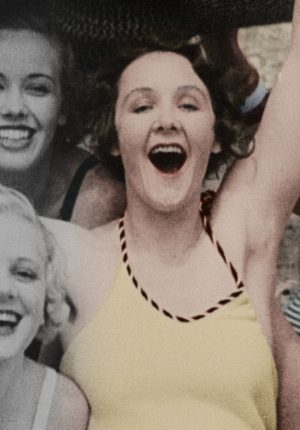
Sporting victories and creative triumphs forge Australia’s distinct identity. This episode reveals the unique conditions that turn Australia into a sports-mad nation. It tells the story of the unlikely cultural export who is the country’s first global superstar, and how Australia’s pioneering film industry rivals Hollywood’s. It explores why a racehorse becomes a national icon, how the surf life-saving movement changes the nation’s image, and how successive waves of newcomers – ballet dancers, American GIs and European immigrants - transform the country. It also reveals how Indigenous Australians have no place in this white world of sport and play, until a young dancer from Arnhem Land and a champion boxer from the backblocks, win world acclaim and pave the way for a radical shift in race relations. Part 2 of 4. Ⓢ
As a nation born of convicts dumped at the bottom of the world, crime has always been a part of modern Australia’s DNA. This episode looks at crimes that shocked the nation from the Pyjama Girl Murder Mystery (1934) to the American serial killer stalking women during WW2 and the Graeme Thorne kidnapping (1960). We investigate grave miscarriages of justices like the case of Arrente man Stuart Maxwell in Ceduna South Australia (1959), who was sentenced to hang for murder. Stuart’s case is a catalyst for the campaign to abolish the death penalty, and helps Australia to shine a light on Indigenous rights. Part 3 of 4. Ⓢ
Work and industry transform Australia, its workforce and identity. This episode shows how in 1900, Australia’s identity is firmly fixed to the land until mechanical advances, driven by the Industrial Revolution, transform farming. It explores the landmark labour case that gives Australian workers the basic minimum wage, and how a Russian-born Jewish immigrant revolutionises Australia’s retail industry. It looks at why an airline becomes a national icon, and how a daring air race helps bridge the tyranny of distance. It tells the story of early Indigenous business enterprise, and the tragic demise of Australia’s most famous Aboriginal painter. It reveals the racist attacks directed at Australia’s early southern European migrant farmers, and the role post-war migrants play in the suburban housing boom. It examines why Vegemite and Ugg Boots become Aussie icons, how the boomerang is appropriated as a marketing tool, and why Australians love their cars and shopping centres. Part 4 of 4. Ⓢ